Law in the Times of AI

By SupremeJuris Editorial | May 11, 2026 | 8 min read
There was a time when the most disruptive technology in a courtroom was the photocopier. Those days feel quaint now. In 2026, artificial intelligence has burrowed into every layer of the legal ecosystem — from the research desks of junior associates to the chambers of federal judges, from the drafting tables of legislators to the compliance offices of multinational corporations. The law, that most deliberate and precedent-bound of institutions, finds itself racing to govern a technology that moves faster than any statute ever could.
This is not a future scenario. This is where we are right now.
The Global Regulatory Patchwork
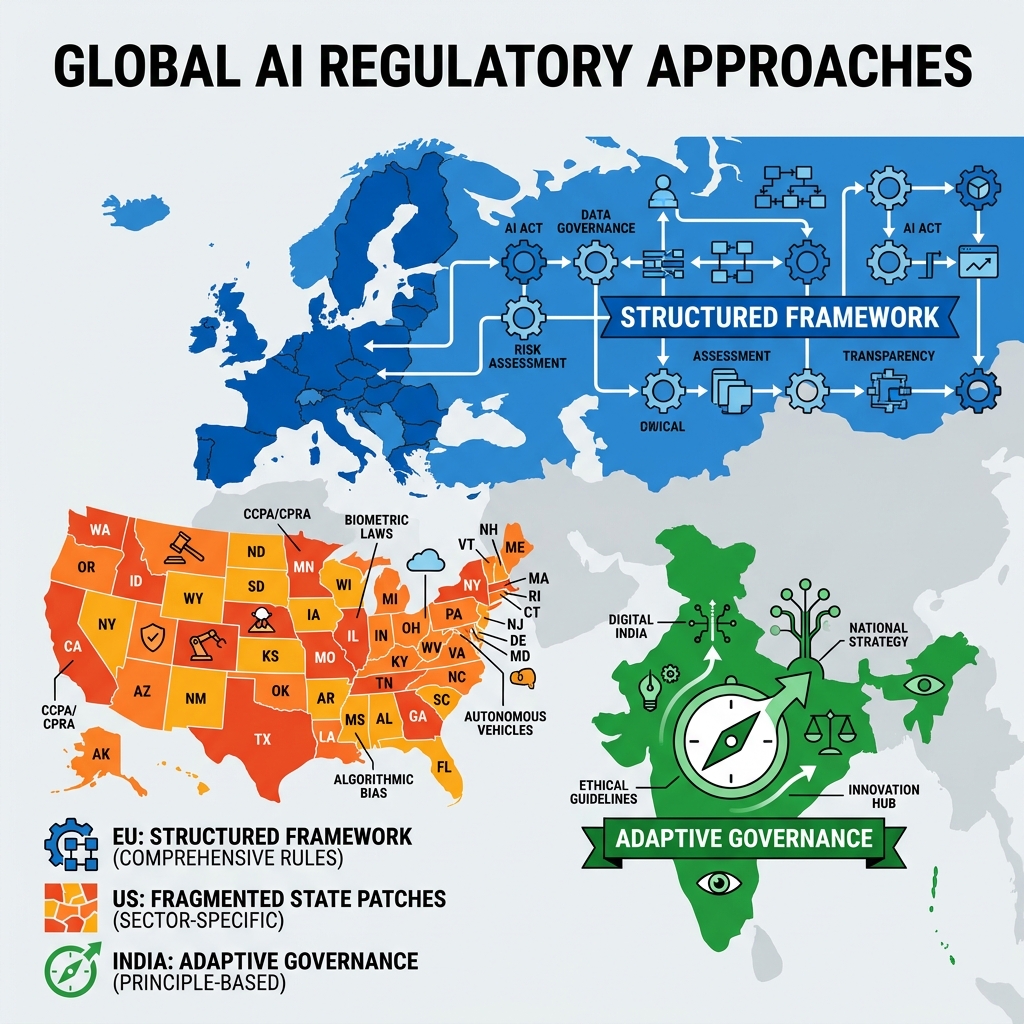
If you are looking for a single, unified body of law governing artificial intelligence, you will not find one. What exists instead is a rapidly expanding patchwork of regulations, guidelines, executive orders, and frameworks — each reflecting a different jurisdiction’s priorities and anxieties.
The European Union: Regulation First
The EU has taken the most ambitious regulatory leap with the EU AI Act, which became law in August 2024. Its implementation has been staggered: bans on “unacceptable risk” AI practices such as social scoring and certain biometric identification systems took effect in February 2025. Rules governing general-purpose AI models followed in August 2025. The remaining provisions covering high-risk AI systems in employment, law enforcement, healthcare, and essential services were originally scheduled for August 2026, though the European Commission’s Digital Omnibus proposal may extend this deadline to as late as December 2027.
The EU’s approach is unmistakable in its philosophy: regulate first, innovate within the guardrails. The maximum penalties under the AI Act can reach €35 million or 7 per cent of a company’s global annual turnover, whichever is higher. For any business operating in or selling into the European market, compliance is not optional — it is existential.
The United States: Innovation First, Regulate Later
Across the Atlantic, the story is very different. The United States still has no comprehensive federal AI law. Instead, what has emerged is a fragmented landscape where individual states are filling the vacuum.
The year 2026 marks a turning point. Multiple state-level AI laws have taken effect, creating real compliance obligations for the first time. California’s Transparency in Frontier AI Act (SB 53) now requires developers of large-scale AI models to publish risk frameworks and report safety incidents, with penalties reaching up to $1 million per violation for companies with revenues exceeding $500 million. Texas’s Responsible AI Governance Act (TRAIGA) came into effect on January 1, 2026, imposing bans on AI systems designed for behavioural manipulation, unlawful discrimination, or the production of deepfake child sexual abuse material. Illinois now requires employers to notify job candidates when AI is used to analyse video interviews, and New York City continues to enforce Local Law 144, which mandates bias audits for automated employment decision tools.
Adding to the complexity, President Trump signed an Executive Order in December 2025 titled “Ensuring a National Policy Framework for Artificial Intelligence,” signalling federal intent to override state-level AI rules deemed inconsistent with national policy. The order directed the Attorney General to establish a task force to challenge such state laws and called on the Secretary of Commerce to identify “burdensome” state AI regulations. Whether this executive action will effectively pre-empt the patchwork of state laws, or simply add another layer of legal uncertainty, remains to be seen.
India: The Pragmatic Middle Path
India presents a third model entirely. Rather than enacting a standalone AI law, India has chosen what policymakers describe as a “techno-legal” approach — regulating the outputs and applications of AI through existing legislation, supplemented by governance guidelines and sector-specific rules.
In November 2025, India released its AI Governance Guidelines, emphasising principles of fairness, accountability, safety, and inclusivity. A Private Member’s Bill introduced in the Lok Sabha in December 2025 — the Artificial Intelligence (Ethics and Accountability) Bill — proposes a statutory Ethics Committee, mandatory bias audits, and penalties of up to ₹5 crore for non-compliance. While not yet enacted, the bill signals growing legislative interest in binding accountability.
More immediately, the Ministry of Electronics and Information Technology (MeitY) notified changes to the IT Intermediary Rules in February 2026, imposing strict obligations around AI-generated content. Platforms must now label synthetic content with visible disclaimers, maintain provenance metadata, and remove non-consensual AI-generated intimate imagery within two hours of a government notice. Failure to comply risks loss of safe harbour protection.
India’s approach reflects its developmental priorities: leveraging AI for inclusive growth and building domestic capabilities, while intervening specifically where concrete risks — deepfakes, algorithmic bias, synthetic misinformation — demand immediate attention.
AI Inside the Courtroom
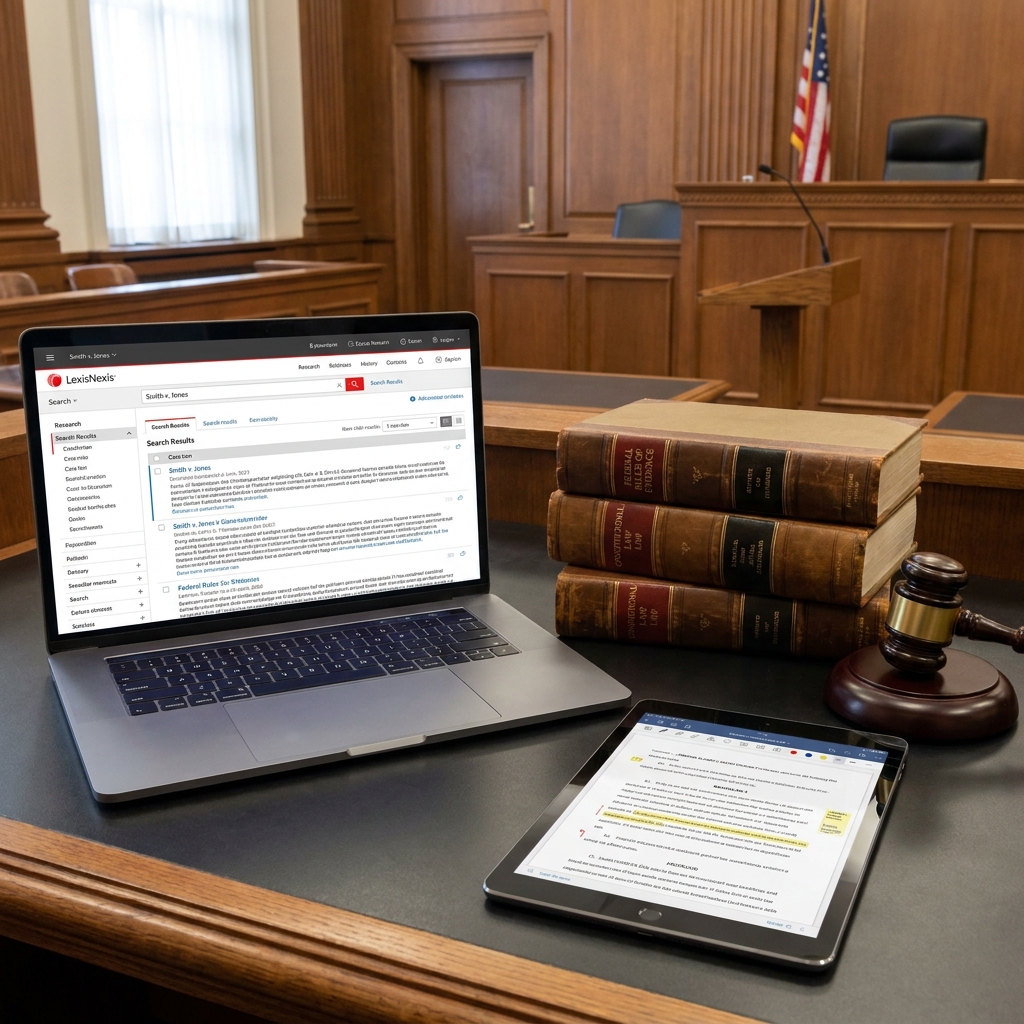
Perhaps the most profound transformation is happening where it is least visible: inside courtrooms and judicial chambers.
A Northwestern University study published in March 2026 found that more than 60 per cent of surveyed U.S. federal judges reported using at least one AI tool in their judicial work. Judges primarily use AI for legal research (30 per cent) and document review (15.5 per cent). Yet only about 22 per cent use these tools on a weekly or daily basis, suggesting that adoption, while broad, remains cautious in practice.
The study also revealed a significant training gap: nearly 46 per cent of judges said that no AI training had been provided by their court administration. Several judges on the First Circuit Court of Appeals have been participating in pilot programmes to experiment with AI features in legal research platforms, but this remains the exception rather than the norm.
On the other side of the bench, lawyers are already deeply embedded in AI workflows. According to the Clio Legal Trends report, 79 per cent of legal professionals utilised AI tools in 2025, yet 44 per cent of law firms had not implemented any formal governance policies around their use. The American Bar Association’s Year 2 Report on AI in law practice captured the shift in professional sentiment: lawyers are no longer debating whether AI will reshape their profession, but how to use it responsibly and effectively.
The risks, however, remain real. The problem of AI-generated “hallucinations” — fabricated case citations, invented legal principles — has not been fully resolved in any current generative AI tool. Courts have seen embarrassing instances where AI-generated filings contained entirely fictitious citations, raising serious questions about professional responsibility and the duty of verification.
As one federal judge put it at the IAPP Global Summit 2026: lawyers can use AI, but they must disclose it, and they must independently verify every citation and factual assertion it produces. The technology is a tool, not a substitute for professional judgment.
The Question No One Has Fully Answered
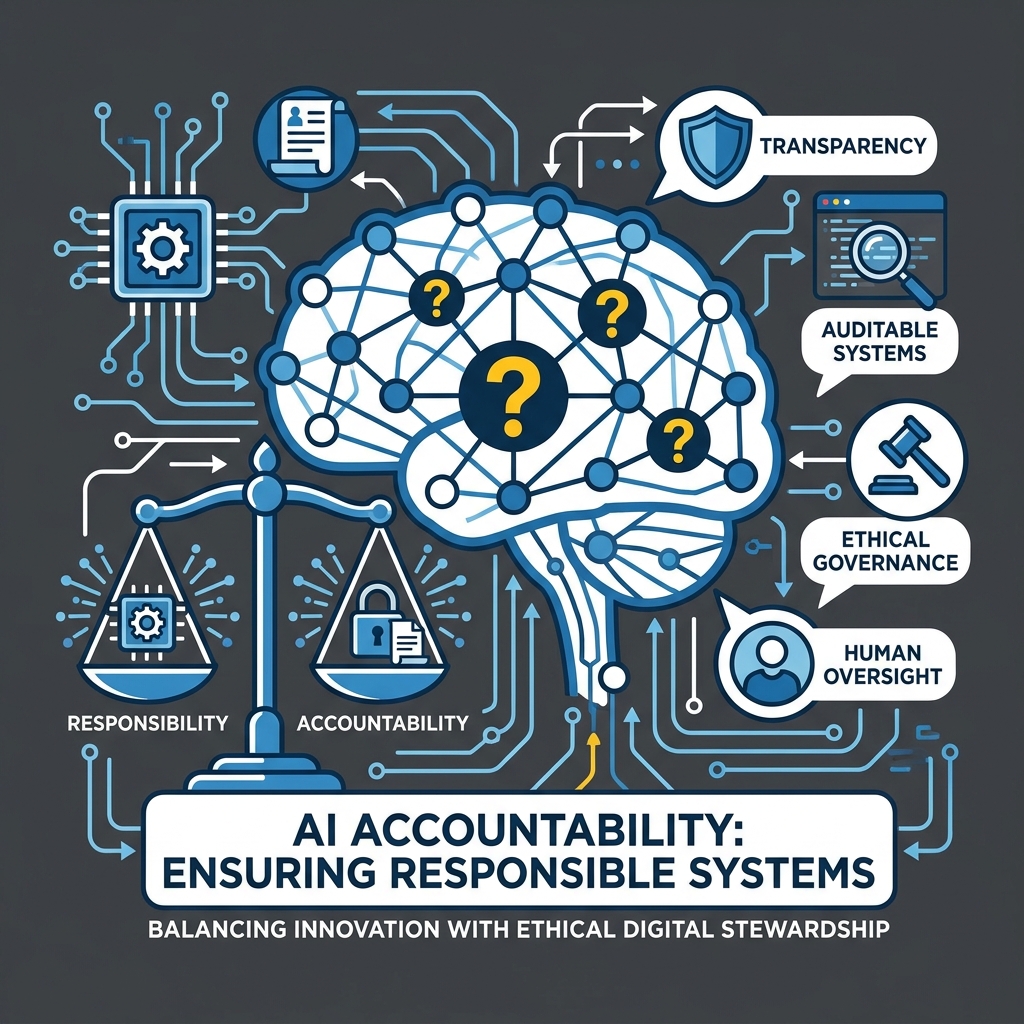
At the heart of the AI-law relationship lies a question that no jurisdiction has fully resolved: who is responsible when AI causes harm?
Consider the scenarios. An AI-driven hiring tool systematically screens out qualified candidates from a particular demographic. An autonomous vehicle’s decision algorithm fails, resulting in injury. A generative AI model produces defamatory content about a real person. A deepfake video manipulates public opinion before an election.
In each case, the chain of accountability is murky. Is the developer liable? The deployer? The user? The AI system itself? Existing legal frameworks — tort law, product liability, anti-discrimination statutes — were not designed with autonomous, self-learning systems in mind. The EU AI Act attempts to address this through its risk-based classification and mandatory impact assessments. California’s AB 316, effective January 2026, prohibits AI developers from claiming that the AI, rather than the developer, bears legal responsibility for harms caused. But these are early and incomplete answers to what will likely be one of the defining legal questions of our era.
What Lawyers and Citizens Should Watch
Several developments in the coming months deserve close attention.
The Colorado AI Act, currently slated to take effect on June 30, 2026, will impose substantial new responsibilities on AI developers and deployers, including requirements for impact assessments, risk management policies, and anti-discrimination safeguards. However, the law may face significant revisions before its effective date.
At the federal level in the United States, the FTC has been directed to issue a policy statement on how existing consumer protection law applies to AI, and the Commerce Department was tasked with evaluating which state AI laws conflict with federal policy. These actions will shape whether the United States moves toward a coherent federal framework or continues its state-by-state approach.
In India, the draft IT Second Amendment Rules published in March 2026 propose extending media-style regulatory obligations to individual social media users posting AI-generated content related to news and current affairs — a potentially far-reaching expansion of platform regulation.
And globally, UNESCO’s new guidelines for AI in the judiciary, published in late 2025, are providing a framework for courts worldwide to adopt AI responsibly while preserving human judgment, fairness, and judicial independence.
The Uncomfortable Truth
The uncomfortable truth about law in the times of AI is this: the technology is not waiting for the law to catch up. AI systems are already making decisions that affect employment, credit, healthcare, criminal justice, and civil liberties. Every day that passes without clear, enforceable legal frameworks is a day in which those decisions are being made in a regulatory vacuum.
The law has always evolved in response to technological change — from the printing press to the telegraph, from the automobile to the internet. But the pace of AI development is unlike anything the legal system has previously encountered. The question is not whether the law will adapt. It always does. The question is whether it will adapt quickly enough, and wisely enough, to protect the rights and interests it was designed to serve.
For those of us who believe in the rule of law, the answer to that question matters enormously. And the work of shaping it belongs not only to legislators and judges, but to every informed citizen willing to pay attention.
SupremeJuris provides commentary and analysis on current legal matters. This article is for informational purposes only and does not constitute legal advice.
